
Venue & Visual Experience
Wedding reception lighting: how to think about the whole room
Wedding reception lighting is not one decision.
Your venue may already have chandeliers, sconces, windows, house lighting or decorative fixtures. On top of that, you may be considering uplighting, dance-floor lighting, candles, focal lighting or other visual effects. Each one does a different job.
Not
"What lighting package do we need?"
Instead
"What jobs does light need to do in this room throughout the reception?"
More than colored lights
"Wedding lighting" can sound like a dark room with colored lights everywhere. It can be much more nuanced than that, and no style is better than another. A reception also does not need to be dark for lighting to matter. Lighting can be:
Start here
Start with the light that is already there.
Before adding anything, notice what the room already provides. Not every venue has all of these.
- Chandeliers
- Pendant lights
- Sconces
- Ceiling fixtures
- Architectural lighting
- Windows
- Daylight
- Fireplaces
- House lighting
- Decorative fixtures
- Outdoor light through windows
- Light around architectural features
Questions to notice
- What do we already like about the room when it is lit?
- What changes after sunset?
- Which existing fixtures are visually important?
- Which areas already draw attention?
Layers of light
Think in layers, not one lighting package.
A reception does not have one kind of lighting. It has layers, from the room's broad atmosphere toward more focused and active light. These are simple categories to help you think, not an industry standard, and most weddings do not use all six.
Existing venue light
What the room already provides.
Ambient + general light
The broader light that shapes how the room feels and functions.
Perimeter + uplighting
Light that can affect walls, architecture and the visual edges of the room.
Focal + accent light
Light used to emphasize particular areas or features.
Dance-floor + intelligent lighting
More active light associated with dancing and higher-energy parts of the night.
Decorative light sources
Candles or other decorative sources that are part of the event design.
= the visual lighting environment
Purpose
Different lighting can do different jobs.
Lighting can serve four broad purposes. They often overlap, and one light can do more than one job.
See
Enough usable light for the room and the event to work comfortably.
Feel
Light that contributes to atmosphere.
Focus
Light that draws attention toward selected areas or features.
Energize
Light that becomes more active around dancing or major moments.
Three roles
Room lighting vs. focal lighting vs. dance-floor lighting.
These roles can overlap, and a reception does not need a separate setup for each one.
Room
Primary role
Shapes the broader visual environment.
Examples
Existing venue lighting, ambient lighting, uplighting.
Focal
Primary role
Draws attention toward a specific area or feature.
Examples
An architectural feature, head table, cake area, monogram surface or other intentional focal point.
Dance floor
Primary role
Supports a more active visual environment around dancing.
Examples
Intelligent or moving lighting around the dance floor.
Where uplighting fits
Uplighting mainly contributes to the room layer by affecting walls, architecture and the edges of the space. It may also emphasize specific architectural features. For a deeper look at how walls, materials and architecture affect the result, see Wedding Uplighting: What It Actually Changes in Your Venue.
The dance floor
What is intelligent dance-floor lighting?
In this guide, intelligent dance-floor lighting means controllable lighting used to create changing visual effects around the dance floor or the higher-energy parts of the reception.
Depending on the setup, these lights may be able to change some of the qualities below. Not every system can do all of them, and what is offered varies from one DJ or lighting company to another.
- Direction
- Movement
- Intensity
- Color
- Pattern
Uplighting usually helps shape the room. Intelligent dance-floor lighting can become an active part of the dancing itself.
Across the night
The dance floor does not have to look like the dinner room.
Receptions evolve. Some couples want the visual atmosphere to shift as dinner turns into dancing. Others want it consistent all night. Both are valid, and changing the lighting is never required. Music can shape each part of the night in a similar way, as covered in cocktail hour vs. dinner vs. dance floor music.
Dinner
Might feel warm, restrained, romantic or architectural.
Transition
The room begins to shift, or stays as it is.
Dancing
Might feel brighter, more colorful, more active or more immersive.
One possible shape. No set times, and staying consistent is just as valid.
Attention
Focal points need intention.
Lighting can influence where attention goes, and the answer may change as the night moves on. The idea builds on the focal points in how to transform your wedding venue. Not every wedding uses all of these.
- Dance floor
- Sweetheart table
- Head table
- Stage
- DJ area
- Cake
- Architectural feature
- Fireplace
- Entrance
- Monogram location
Where do you want attention during this part of the reception?
No single right look
Brighter is not automatically better. Darker is not either.
A brighter room is not automatically less romantic.
A darker room is not automatically more sophisticated.
A colorful dance floor is not automatically more fun.
Minimal lighting is not automatically more elegant.
Beyond color
Color does not have to do all the work.
Color is easy to picture, so it often gets the most attention. But it is only one part of the decision, and no color carries a universal feeling. Lighting decisions can also involve:
Layers together
How the lighting layers work together.
Three hypothetical directions show how the same layers can be weighted differently. They are examples of thinking, not packages, and the third shows that adding very little is a valid choice.
Architecture first
Venue
A room with visually important architecture.
Approach
- Existing fixtures remain prominent.
- Subtle perimeter lighting supports architectural details.
- Dance-floor lighting becomes more noticeable later.
Relative emphasis by layer
- Existing venue light
- Ambient + general light
- Perimeter + uplighting
- Focal + accent light
- Dance-floor + intelligent lighting
- Decorative light sources
Warm to energetic
Venue
A neutral ballroom.
Approach
- A warm, restrained dinner atmosphere.
- Selected focal areas receive attention.
- Visual energy increases around the dance floor later.
Relative emphasis by layer
- Existing venue light
- Ambient + general light
- Perimeter + uplighting
- Focal + accent light
- Dance-floor + intelligent lighting
- Decorative light sources
Keep it simple
Venue
A room chosen because the couple loves its existing lighting.
Approach
- Existing lighting does most of the visual work.
- Little additional room lighting.
- Dance-floor lighting only if it supports the dancing atmosphere they want.
Relative emphasis by layer
- Existing venue light
- Ambient + general light
- Perimeter + uplighting
- Focal + accent light
- Dance-floor + intelligent lighting
- Decorative light sources
The bars show relative emphasis in each example, not amounts of equipment.
Decorative light
What about candles and decorative light?
Candles and other decorative sources can add to the atmosphere, but they play a different role from entertainment or production lighting. Venue rules about candles and open flame vary, so confirm them directly with your venue.
Sharing the room
Lighting and other enhancements.
- Dancing on the clouds
- Cold sparks
- Monograms
- Marquee letters
- Other entertainment enhancements
Reception lighting often shares the room with other enhancements. Depending on how the room is approached, lighting can:
See it in your space
Seeing the whole lighting environment in your venue.
Lighting is hard to judge from isolated inspiration photos, because each one shows:
- A different room
- Different surfaces
- Different architecture
- Different existing fixtures
- Different enhancement combinations
Seeing a visual concept in your actual venue can help you think about how the pieces relate, such as:
- Which areas draw attention
- Whether the room feels visually balanced
- How prominent the dance floor becomes
- How lighting relates to architecture
- How lighting and enhancements interact
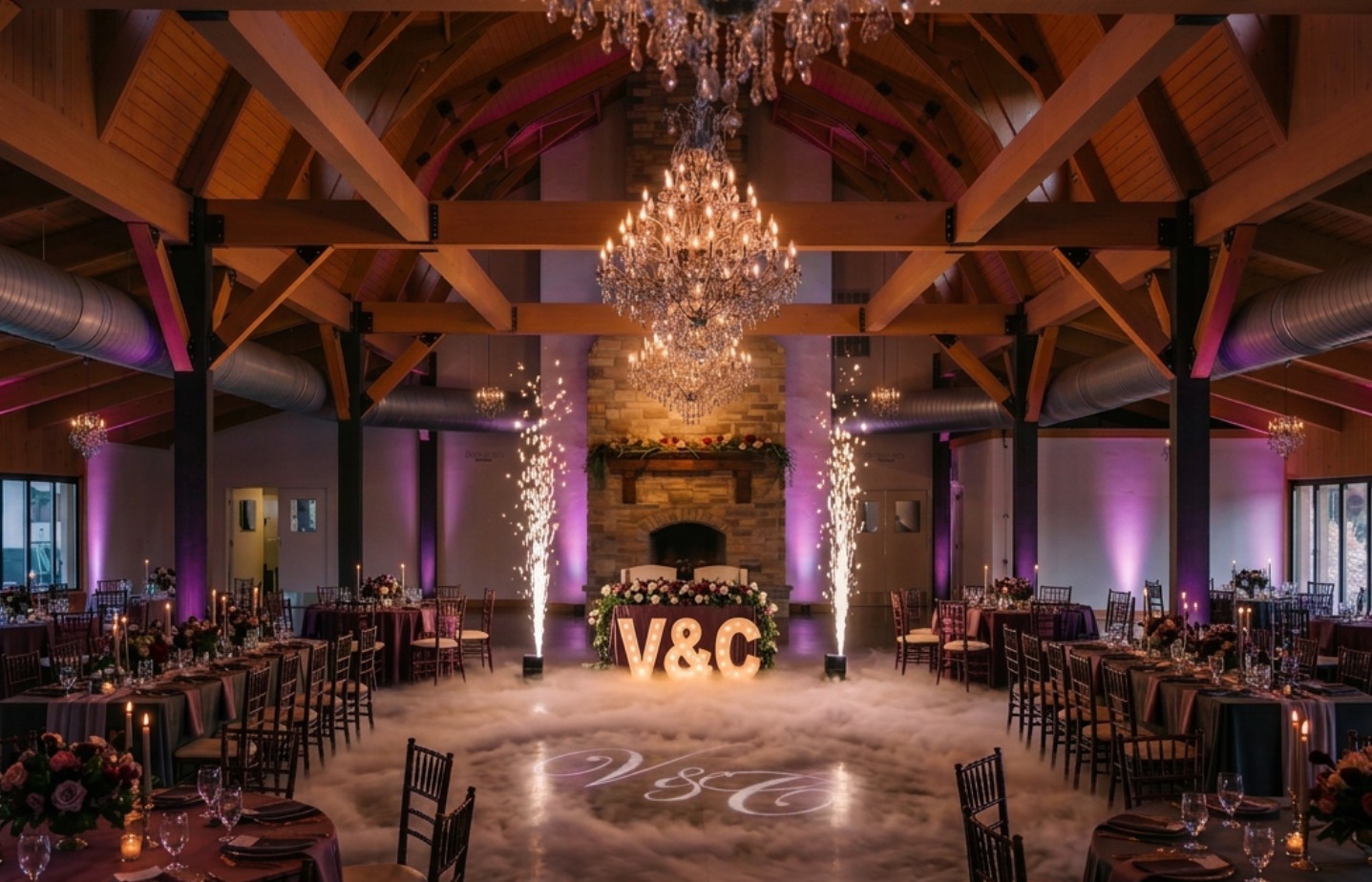
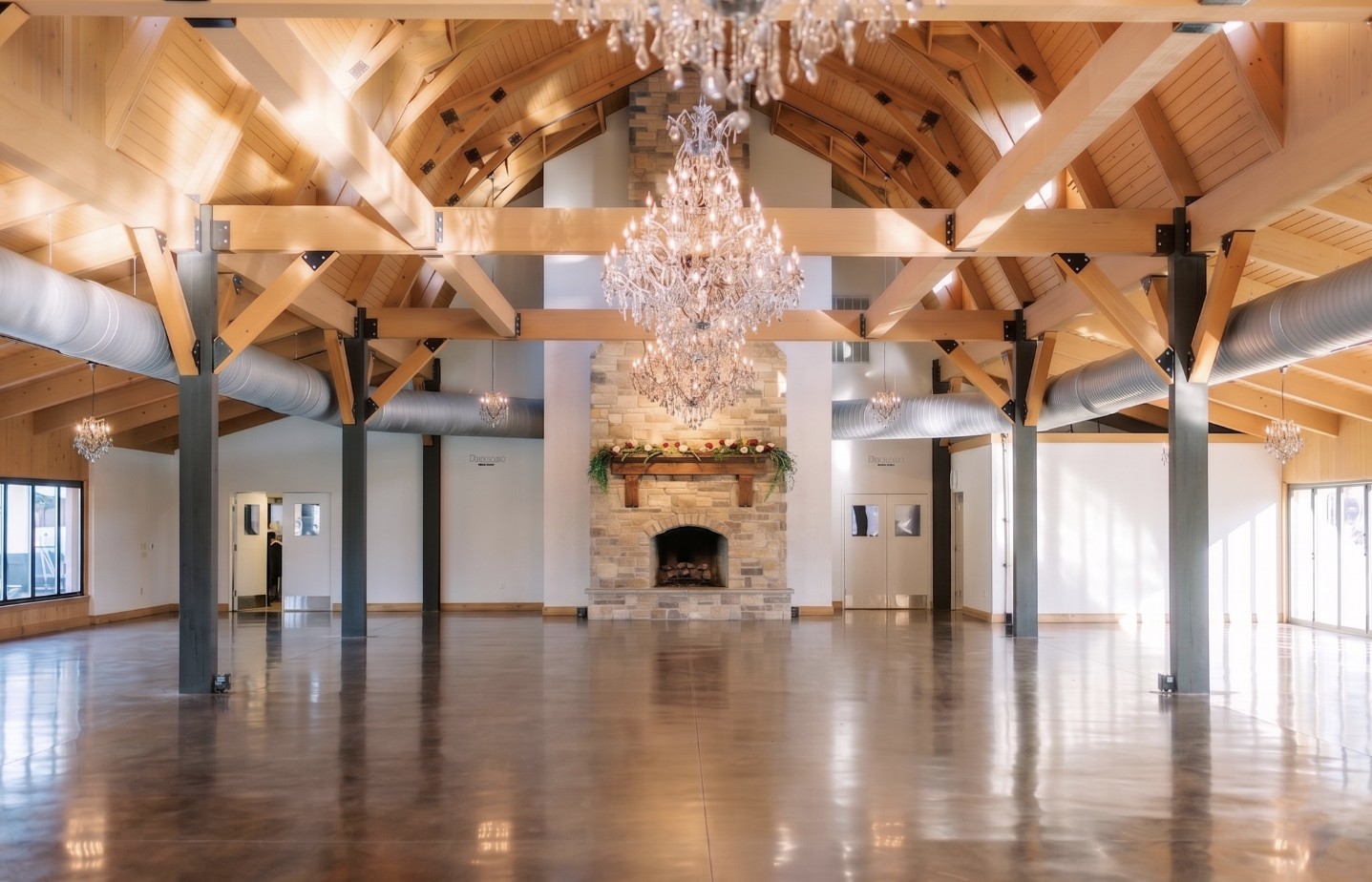
Drag to reveal
VibeCraft Marketplace is being built to help couples picture entertainment and enhancement concepts in real venues when it launches. A visualization is a concept, not a technical lighting plan or an exact prediction. It does not simulate brightness or exact color, or plan equipment, placement, safety or venue rules. Learn more about Wedding Visualization.
A planning exercise
Your reception lighting brief.
Think these through, or copy them into your own notes. This is a planning exercise, not a VibeCraft feature. Nothing here is saved or submitted.
Your Reception Lighting Brief
What we already like about our venue's lighting
We want dinner to feel
We want dancing to feel
Areas we want to emphasize
Areas that do not need extra attention
Uplighting
Dance-floor lighting
Other visual enhancements we're considering
We want the transition into dancing to feel
The overall lighting should feel
Three example briefs. None is the ideal one.
Architecture leads
- What we already like
- the vaulted ceiling and the original iron chandeliers.
- We want dinner to feel
- warm and architectural.
- Areas we want to emphasize
- the ceiling and the arched windows.
- Uplighting
- Maybe, only to support the architecture.
- The overall lighting should feel
- like the building is the star.
A noticeable shift into dancing
- We want dinner to feel
- polished and restrained.
- We want dancing to feel
- colorful, active and immersive.
- Dance-floor lighting
- Interested.
- We want the transition into dancing to feel
- like a clear new chapter of the night.
- Areas that do not need extra attention
- the bar and the back of the room.
The venue does the work
- What we already like
- almost everything: candlelit tables, sconces and big windows at sunset.
- Uplighting
- Not a priority.
- Dance-floor lighting
- Unsure. Only if it fits.
- Areas that do not need extra attention
- most of the room. It already feels right.
- The overall lighting should feel
- natural and close to how the room already looks.
Before you decide
Questions to ask about reception lighting.
What lighting already exists in the venue?
What will the room look like after sunset?
Which existing fixtures will stay on?
Which parts of the room should receive the most attention?
Do we want dinner and dancing to feel visually different?
What role would uplighting serve?
What role would dance-floor lighting serve?
How will lighting interact with other enhancements?
Are there areas we specifically do not want emphasized?
What venue rules should we confirm?
What does the entertainment or lighting professional actually provide?
Can they explain what each lighting element is intended to do?
Questions
Wedding reception lighting FAQ
What kind of lighting do you need for a wedding reception?
There is no universal list. The right approach depends on your venue, its existing lighting, the format of your reception, the atmosphere you want and your priorities. Some receptions add very little. Others combine several layers of light.
What is wedding reception lighting?
It is the overall lighting environment of the reception: the venue's own fixtures and daylight, plus anything added, such as ambient light, uplighting, focal lighting, dance-floor lighting and decorative sources like candles. Together they shape how the room looks and feels.
What is the difference between uplighting and dance-floor lighting?
Uplighting mainly shapes the room by affecting walls, architecture and the edges of the space. Dance-floor lighting brings more active visual energy to the dancing area. They can work together but do different jobs.
What is intelligent lighting at a wedding?
Broadly, it refers to controllable lighting used to create changing visual effects around the dance floor or higher-energy parts of the reception. Depending on the setup, it may change direction, movement, intensity, color or pattern. Capabilities vary by company and equipment.
Do you need uplighting and dance-floor lighting?
No. A couple may want one, both or neither. It depends on the venue, what the existing lighting already provides and the atmosphere you want during dinner and dancing.
Should wedding reception lighting change during the night?
It can, but it does not have to. Some couples like dinner to feel warmer or more restrained and dancing to feel more active. Others prefer one consistent atmosphere all night. Both are valid.
Does a wedding reception need to be dark for lighting to work?
No. Lighting can shape a room at many levels of brightness. A brighter room is not automatically less romantic, and a darker room is not automatically more sophisticated. What matters is whether the lighting supports each part of the reception.
Should reception lighting match wedding colors?
It does not have to. Color is only one part of lighting. Where light appears, what it emphasizes, how noticeable it is and how it relates to the venue can matter just as much.
How does venue lighting affect wedding lighting?
The venue's chandeliers, sconces, windows and house lighting are part of the final look. Added lighting combines with them rather than replacing them, so it helps to start by noticing what the room already provides, including after sunset.
Can you have too much lighting at a wedding reception?
It is possible for different lights and enhancements to compete for attention. More lighting is not automatically better. Lighting tends to work best when each element has a clear purpose.
What lighting should be used during dinner?
There is no single answer. Many couples want guests to see comfortably and feel the atmosphere they have in mind, whether that is warm, polished, architectural or something else. Talk with your venue and entertainment or lighting professional about what is possible in your room.
How can I picture reception lighting in my actual venue?
Inspiration photos usually show a different room with different fixtures and surfaces. Seeing a concept inside your own venue can help. VibeCraft Marketplace is being built to help with that through Wedding Visualization when it launches, which shows a concept rather than a technical lighting plan or exact prediction.
Keep Planning
Where to go next.
The best reception lighting is not the most lighting.It is lighting with a purpose.
VibeCraft Marketplace is being built to help couples use their venue, atmosphere and entertainment preferences as context for finding DJ companies that may fit the celebration they want.