Venue & Visual Experience
Which wedding enhancements work well together?
You may like several enhancement ideas on their own. The harder question is whether those ideas make sense together inside the same reception. The goal is not the longest list. It is one reception where the visual choices belong together.
Don't count enhancements.
Give each one a job.
Start with the experience
Start with the experience, not the enhancement list.
It is easy to evaluate enhancements one at a time. You could answer yes to every individual question and still end up with a room that feels visually disconnected. Instead, start where transforming your venue starts: with the experience.
One at a time
- Do we like uplighting?
- Do we like clouds?
- Do we like cold sparks?
- Do we like marquee letters?
- Do we like a monogram?
Start here instead
- What should the room feel like?
- Where should guests look?
- Which moments deserve extra emphasis?
- How much personalization do we want?
- When should the room become more visually active?
Individual yes answers do not automatically create a cohesive whole.
Five jobs
Give each enhancement a job.
These five jobs are a planning framework for this guide, not industry categories. They are simply a way to ask what each choice is contributing. An enhancement can do more than one job.
Atmosphere
Shapes how the overall room feels.
Focus
Directs attention toward a place or feature.
Moment
Adds visual emphasis to a specific part of the reception.
Personalization
Adds something specifically connected to you.
Energy
Changes how visually active part of the reception feels.
Enhancement to job map
| Enhancement | Atmosphere | Focus | Moment | Personalization | Energy |
|---|---|---|---|---|---|
| UplightingOften atmosphere. May support focus depending on how the room is treated. | |||||
| Reception / dance-floor lightingOften atmosphere and energy. May also create focus. | |||||
| Dancing on the CloudsOften a moment. May add focus. | |||||
| Cold sparksOften a moment with strong focus. | |||||
| Monogram lightingOften personalization. May become a focal point. | |||||
| Marquee lettersOften personalization, depending on what they display. May become a focal point. |
Different jobs
When two enhancements support each other.
Two enhancements can work together when they contribute different things to the same visual experience. These are examples of thinking, not recommendations, and none of them always works.
Uplighting may shape the broader atmosphere while the monogram adds personalization to a selected surface.
Does the venue give both elements room to do their jobs?
Lighting shapes the room while marquee letters create a physical visual element in a particular area.
Does the combination support the feeling you want?
One adds a low floor-level layer while the other adds vertical emphasis around a featured moment.
Would one element be enough?
Overlap
When two enhancements start doing the same job.
Overlap is not automatically bad. It is worth noticing. For example:
A monogram and marquee letters may both be providing personalization.
Cold sparks and highly active moment lighting may both be creating strong visual emphasis.
Uplighting and other room lighting may both be affecting the atmosphere.
- Are both elements adding something distinct?
- Are they reinforcing one intentional idea?
- Or are they simply repeating the same visual job?
Even the last case is a prompt to look closer, not a verdict. Sometimes concentrating several elements is exactly the point.
Support vs. competition
How many things are askingto be the focal point at once?
Support
This element helps another important feature or moment do its job.
Complement
The elements contribute different visual roles without fighting for attention.
Repeat
Multiple elements are doing similar jobs.
Compete
Several elements are asking guests to look somewhere different at the same time.
None of these labels decides what you should do. They are prompts for looking at the room.
Layers of attention
Think in layers of attention.
This is about where attention goes, not about lighting systems. Think in three levels:
Room: the overall environment guests experience. Area: a part of the venue that receives more visual emphasis. Moment: a temporary point when attention becomes especially concentrated.
The example on the right is a way of thinking, not a recommended package. A simpler wedding may use only the room level. Another may use room and area. Another may add moment effects. No level is better.
Room
Uplighting, ambient environment
Area
Dance floor, plus marquee letters or a monogram
Moment
First dance, plus clouds and/or cold sparks
An example of thinking. Not a package.
Your room
The venue changes which combinations make sense.
The same combination may feel very different from one space to the next. These are examples, not rules:
- A ballroom
- An industrial space
- A tent
- A historic venue
- A modern venue
- A room with strong architecture
- A visually simple room
Venue features change
The venue changes the answer.
Room-wide and moment-based
Combining room-wide and moment-based effects.
Using both kinds can create contrast between the general reception environment and a featured moment. That contrast is not automatically necessary. For how the room itself is lit, see thinking about the whole room.
Room-wide choices
May shape the environment for a larger portion of the reception.
Uplighting, broader reception lighting
Moment-based choices
May create additional emphasis around a particular moment.
Dancing on the Clouds, cold sparks
- Does the moment need additional separation from the room?
- Would the room itself already provide enough focus?
Personalization
Combining personalization.
Both may add personalization, in different ways. A monogram is projected onto a surface. Marquee letters are a physical object occupying space. Neither, one or both can be the right answer.
Do we want personalization in more than one place?
Are the two elements serving different visual roles?
Would using both reinforce one intentional idea?
Would one make the other unnecessary?
Moment effects
Combining moment effects.
Dancing on the Clouds adds a low, floor-level layer. Cold sparks add vertical emphasis. Together, more visual information is concentrated into the same moment. That may be exactly what you want. Or one effect may already do the job. Or neither may fit.
All four are equally valid. For any physical effect or setup, the specific equipment, venue policies and applicable requirements still need to be confirmed with your venue and provider.
Three directions
Three ways to build a cohesive visual experience.
Three different philosophies, shown side by side. They are not tiers, and none is more complete than another. Each can be fully intentional.
Architecture-first
The venue already has strong visual character.
Possible direction
- Restrained room lighting
- Little or no added personalization
- No moment effect unless it has a clear purpose
Support the venue rather than add visual elements everywhere.
Personalization-first
You value seeing something distinctly yours in the room.
Possible direction
- Room atmosphere
- One intentional personalization element, such as a monogram or marquee letters
- Restrained moment effects, or none
Give personalization somewhere intentional to live.
Featured-moment-first
You want one part of the reception to receive noticeably stronger visual emphasis.
Possible direction
- A cohesive room environment
- Restrained personalization
- One or more moment-based effects considered specifically for that moment
Let the featured moment be the visual peak.
The remove one test
If you can't say what it adds, ask why it's there.
For every enhancement you are considering, ask: if we removed this, what would the experience lose?
If you cannot say, that does not automatically mean it should go. It may just mean the element does not have a clear job yet.
- Atmosphere
- Focus
- Personalization
- Energy
- A featured moment
- Nothing we actually care about
More is not automatically more cohesive
Cohesionis not a count.
Adding enhancements one at a time can make sense individually while producing a room with too many competing ideas. At the same time, several enhancements can work together when their roles are clear.
The number is not the decision. The relationship between them is.
Your actual venue
Seeing the combination in your actual venue.
Inspiration usually shows someone else's venue, someone else's architecture, someone else's lighting, someone else's dance floor, someone else's focal points and someone else's enhancement combination. Seeing a concept in your own venue can help you think about the combination as one scene, including:
- Whether the room has a clear focal point
- Whether several elements compete
- Whether personalization has an intentional place
- Whether a featured moment feels distinct
- Whether the room feels visually balanced
- Whether removing something makes the concept clearer
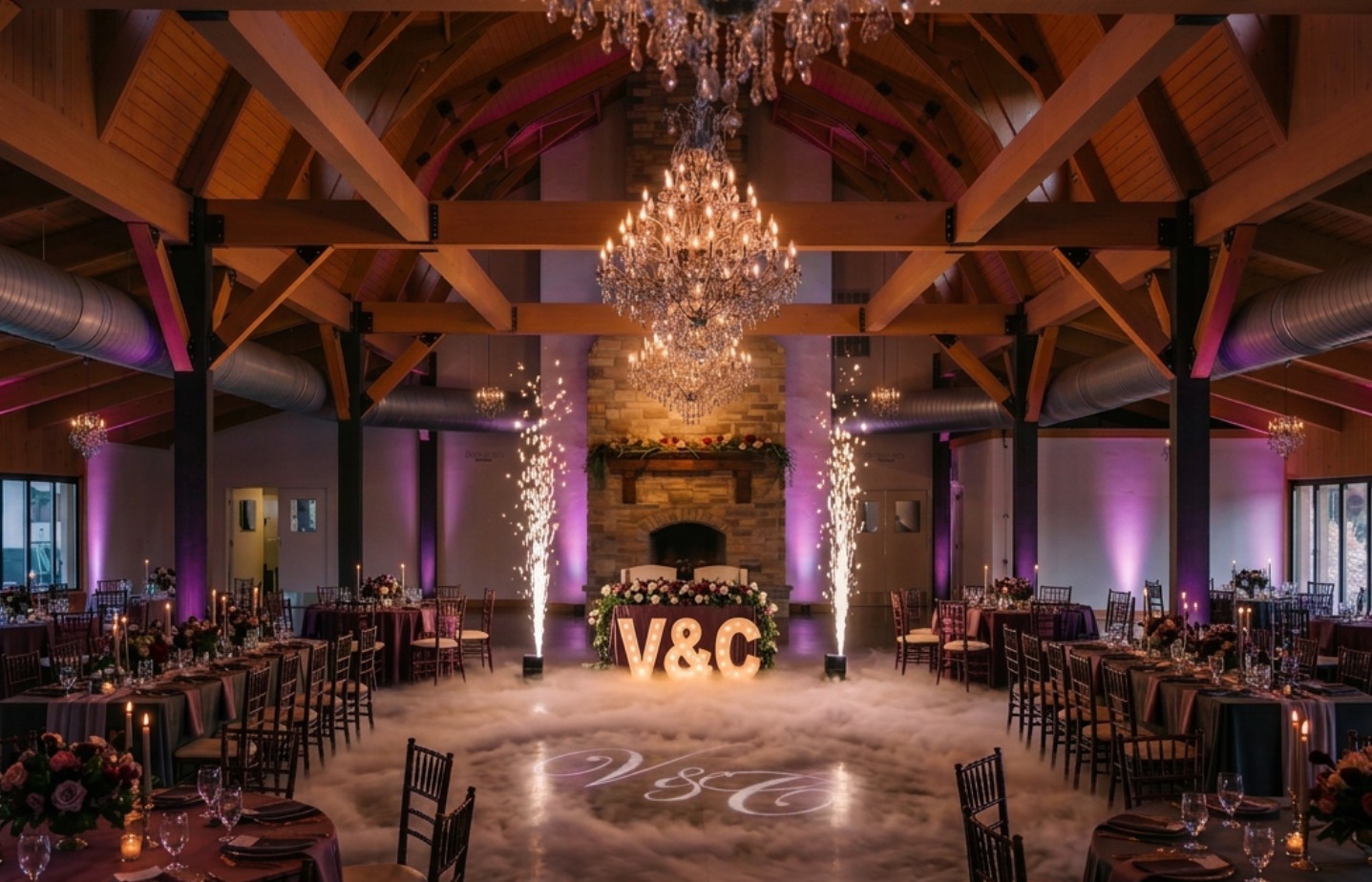
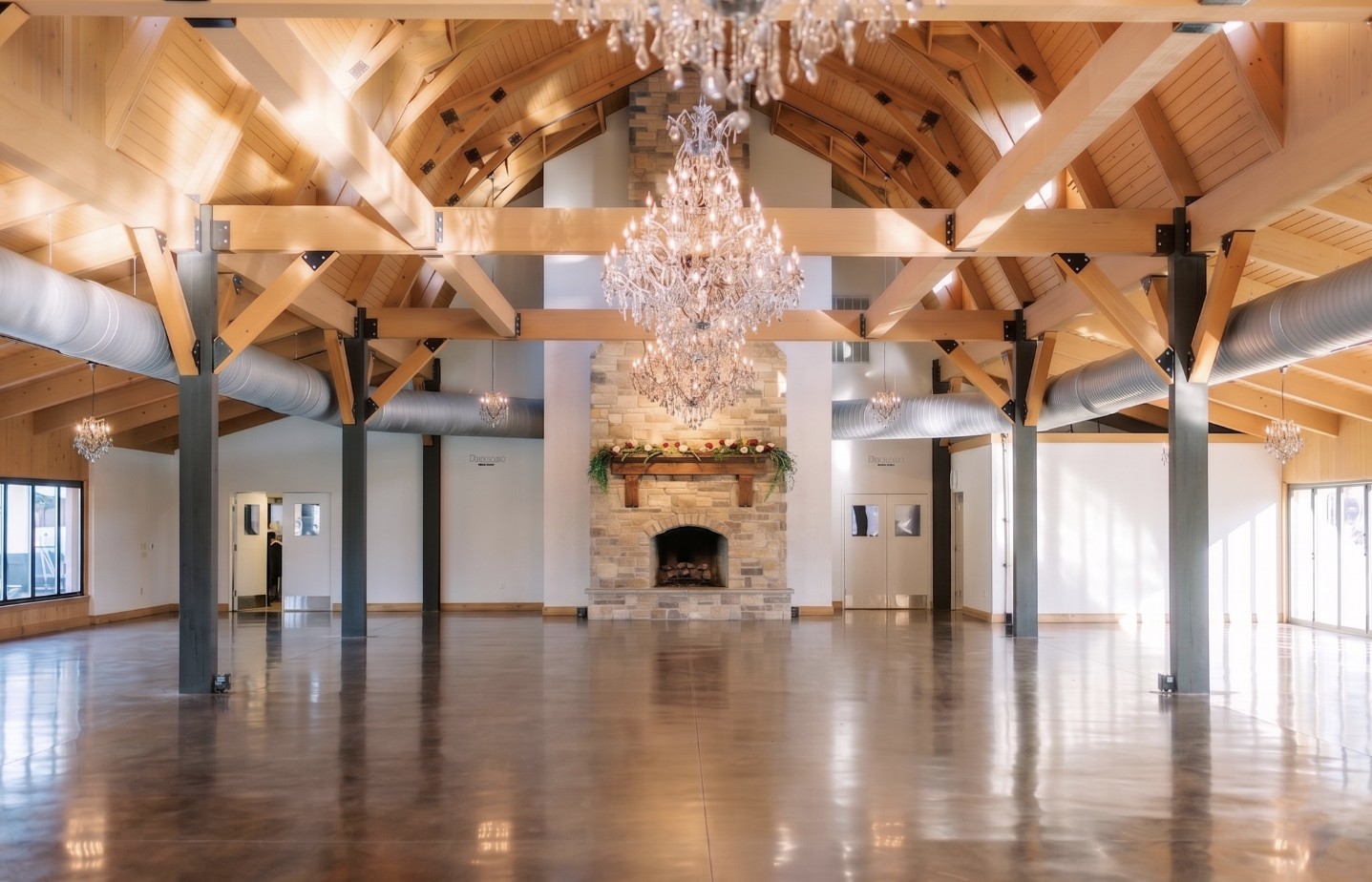
Drag to reveal
VibeCraft Marketplace is being built to help couples see and think about entertainment and enhancement concepts in real venues when it launches. A visualization is a concept. It does not choose the best combination, guarantee cohesion, verify technical or equipment compatibility, physical fit, safety, local requirements or venue permission, or create a production plan. Learn more about Wedding Visualization.
A planning exercise
Your enhancement plan.
Think these through, or copy them into your own notes. This is a planning exercise, not a VibeCraft feature. Nothing here is saved or submitted.
For each enhancement
Enhancement
Its job
Where it shows up
When it matters
What it supports
What might compete with it
If we removed it
Overall
The room should feel
Our main focal point
The moment we most want to emphasize
How much personalization we want
What we want to keep visually simple
The one thing we do not want
Three example plans. None is the ideal one, and none is bigger or better.
Architecture-first
- The room should feel
- warm and calm, letting the timber ceiling and brick walls lead.
- Enhancement
- soft room lighting. Its job: atmosphere.
- Our main focal point
- the venue itself, especially the far brick wall.
- What we want to keep visually simple
- everything. No added signage or effects.
- If we removed it
- the room would feel darker and less finished in the evening, so we are keeping it.
Personalization-first
- The room should feel
- relaxed and personal.
- Enhancement
- our initials on one plain wall. Its job: personalization, with some focus.
- What it supports
- the room atmosphere we already have from the lighting.
- What might compete with it
- marquee letters, so we chose one personalization element, not both.
- The one thing we do not want
- our names in several places around the room.
Featured-moment-first
- The room should feel
- cohesive and understated for most of the night.
- The moment we most want to emphasize
- our first dance.
- Enhancement
- one moment effect for that dance only. Its job: moment.
- What we want to keep visually simple
- dinner and the rest of the room.
- If we removed it
- the first dance would feel like the rest of the evening. We want it to feel distinct, so it stays.
Before you decide
Questions to ask before finalizing your enhancements.
What do we want the room to feel like?
What is already visually strong about the venue?
What should be the main focal point?
Which moments actually need extra emphasis?
What job is each enhancement doing?
Are two enhancements doing the same job?
If so, is that repetition intentional?
How many elements are asking for attention in the same area?
How much personalization do we actually want?
Are we leaving any visual space open?
Would removing one element make the room clearer?
Do the venue and professionals involved permit and support the specific physical setups being considered?
Which technical or safety questions still need to be confirmed directly with the appropriate venue or provider?
Questions
Wedding enhancements FAQ
Which wedding enhancements work well together?
There is no universal best combination. Enhancements tend to work together more coherently when each one has a clear role, such as atmosphere, focus, a featured moment, personalization or energy, and when they support each other rather than unintentionally competing for attention in the same place at the same time.
How many wedding enhancements should you have?
There is no ideal number. One enhancement, several, or none can all be intentional. What matters more is what each one contributes and how they relate to each other and to your venue.
Can you use uplighting with a wedding monogram?
Many couples consider both. Uplighting may shape the broader atmosphere while a monogram adds personalization to a selected surface. Whether they fit together depends on your venue, the surface, the surrounding light and whether both are adding something you value. Confirm the specific setup with your provider and venue.
Can you use marquee letters with uplighting?
They can appear in the same reception. Lighting shapes the room while marquee letters add a physical visual element in one area. It helps to ask whether the letters have a clear place to live and whether the lighting supports or competes with them.
Can you use Dancing on the Clouds with cold sparks?
Some couples consider both for the same moment. Clouds add a low, floor-level layer while cold sparks add vertical emphasis, so together they concentrate more visual information into one moment. That may be what you want, one may be enough, or neither may fit. Whether both are possible depends on your venue, provider and applicable requirements, which need to be confirmed directly.
Do you need both marquee letters and a monogram?
No. Both can add personalization, in different ways. You might use one, both, or neither. If you use both, ask whether they serve different visual roles or simply repeat the same job.
Can you have too many wedding enhancements?
There is no count that defines too many. Problems tend to come from unclear roles and visual competition, when several elements are asking guests to look somewhere different at the same time. Several enhancements can also work well when their roles are clear.
Should every enhancement match?
Cohesion does not require everything to look identical. The choices should make sense together within the experience you want, even if they look different from each other.
Which wedding enhancement should I choose first?
Start with the venue and the experience you want rather than an enhancement ranking. Once you know how the room should feel, where guests should look and which moments matter most, it becomes easier to see what each option would contribute.
Are wedding enhancements worth it?
There is no universal yes or no. It depends on what each element would contribute to your reception and whether you value that contribution.
What if my venue already has a lot of visual detail?
Then the venue may already be doing some of the jobs enhancements might otherwise do, such as creating focal points or atmosphere. That does not mean you should add nothing. It means each addition is worth checking against what the room already provides.
How can I picture multiple wedding enhancements in my venue?
Inspiration photos usually show someone else's room and someone else's combination. VibeCraft Marketplace is being built to help couples see concepts in their own venue through Wedding Visualization when it launches. A visualization is a concept. It does not verify technical compatibility, physical fit, safety or venue permission.
Keep Planning
Where to go next.
Don't count enhancements.Give each one a job.
The goal is not to add everything you like. It is to create one wedding where the room, the moments and the details feel like they belong together.