
Venue & Visual Experience
How to transform your wedding venue for the reception you want
A reception's atmosphere comes from how your venue, lighting, focal points and entertainment choices work together.
You do not need to turn your venue into a completely different place, and you do not need every enhancement. You need choices that make sense for your room and the experience you want.
Not
"Which upgrades should we add?"
Instead
"What do we want this room to feel like, and which choices actually help create that?"
The order that helps
Think venue first, enhancements last.
Start with the room and the feeling. Enhancements come last, as tools for what you have already decided matters.
The opposite approach, collecting one enhancement after another and hoping they add up, is how rooms end up with lots of effects and no clear atmosphere.
Start with the room
Start with the room you already chose.
Every venue already has a visual identity. Many couples chose their venue because they love it, so the room is the starting point, not a problem to solve.
Before deciding what to add, notice what is already there. Not every venue has all of these, and that is fine.
What the room already gives you
Architecture
Beams, columns, arches, ceilings and the shape of the space.
Existing light
Chandeliers, fixtures, windows and house lighting.
Focal points
A fireplace, a stage, a view or a wall people already notice.
Layout
Where the dance floor, entertainment, entrances and tables sit.
Surfaces
Wall colors, wood, stone, brick, glass and fabric.
Scale
Ceiling height and how large or intimate the room feels.
Things you might notice
Architecture · Wall colors + materials · Ceiling height · Windows · Existing fixtures · Permanent lighting · Dance-floor location · DJ / entertainment location · Entrances · Stage areas · Fireplaces · Columns · Outdoor views · Existing focal points
The feeling
Decide how you want the room to feel.
Visual decisions get much easier once you have words for the atmosphere you want. If you are not there yet, start with describing the vibe you want. These pairings are examples, not categories to choose from, and combinations are normal.
Warm + intimate
Polished + romantic
Modern + energetic
Colorful + expressive
Minimal + architectural
Relaxed + inviting
Visual attention
Find the room's focal points.
Not every part of the room needs equal emphasis. A reception often feels more intentional when it has a few clear areas of attention rather than every element competing at once.
Your answer can guide where lighting goes, where a monogram or marquee letters might sit, and where entertainment effects make sense. There is no universal focal point. It depends on your room and what matters to you.
- Sweetheart table
- Head table
- Dance floor
- DJ area
- Cake
- Fireplace
- Architectural wall
- Stage
- Entrance
- Ceiling feature
Where do you want people looking?
Lighting
Use lighting to change the atmosphere.
Lighting is one of the strongest ways to change how a room feels without physically changing the venue. It can add warmth, define architecture, guide attention and shift the energy as dinner turns into dancing. Think of it in layers.
Ambient + existing light
The room's chandeliers, fixtures, windows and house lighting are already part of the visual environment. Everything else builds on them.
Accent + focal lighting
Can emphasize specific areas or features, like a table, a wall or a cake.
Dance-floor + intelligent lighting
Can shift attention and energy toward dancing later in the reception.
Room + moment
Think about moments, not just decorations.
Some choices shape the room for hours. Others are designed for a specific moment. Knowing which is which helps you decide where an enhancement belongs. An effect for a first dance does a different job than lighting that shapes the room all night.
Shapes the room
Atmosphere over hours
- Uplighting
- Ambient lighting
- Monogram projection
- Marquee letters
Shapes a moment
Effect in seconds or minutes
- Dancing on the clouds
- Cold sparks
- Intelligent lighting changes during dancing
These categories are not absolute. A monogram can mark a moment, and dance-floor lighting can shape the room for the rest of the night.
Enhancement overview
Understand what each enhancement actually changes.
A short overview of what common enhancements actually change. Details like requirements, setup and pricing vary by vendor and venue, so confirm them with the companies you are considering.
Uplighting
- Primary effect
- Changes the atmosphere and appearance of walls and architectural surfaces.
- Think about
- Wall color, architecture, room size, existing lighting.
Dancing on the clouds
- Primary effect
- Creates a low-lying cloud effect around the couple, most commonly associated with a first dance or featured moment.
- Think about
- Venue policies, floor area, placement and the moment where it would be used.
Cold sparks
- Primary effect
- Creates a controlled spark-like visual effect for selected moments.
- Think about
- Venue approval, placement, local requirements and where people will be positioned.
Monogram
- Primary effect
- Adds a personalized projected visual element.
- Think about
- Projection surface, visibility, placement and whether the room has an appropriate focal area.
Marquee letters
- Primary effect
- Creates a physical decorative focal point using letters or words.
- Think about
- Available floor space, placement, sight lines and how the letters interact with the rest of the room.
Intelligent dance-floor lighting
- Primary effect
- Changes the visual energy around the dance floor as the reception moves into dancing.
- Think about
- Dance-floor location, room lighting and the atmosphere you want during open dancing.
Intentional, not maximal
More is not automatically better.
You might love cold sparks, clouds, uplighting, a monogram, marquee letters and intelligent lighting individually. That does not automatically mean they all belong together in your room.
Using several enhancements is not inherently excessive either, as long as each serves a different purpose and fits the space. The question is whether the choices feel intentional together.
Keep
What directly supports the atmosphere you want?
Focus
What deserves to be visually prominent?
Layer
What can support the room without competing for attention?
Skip
What do you like individually but may not need here?
Context matters
The same enhancement can look different in different venues.
The result of an enhancement depends on the room around it. The same choice can look quite different from one venue to the next. This is not about technical rules. It is about remembering that your room shapes the outcome.
Uplighting
Against dark brick, it does not necessarily read the same way as against a light ballroom wall.
Monogram
Needs an appropriate projection surface where people will see it.
Marquee letters
Require physical space and intentional placement.
Cold sparks
Depend on where the effect is positioned relative to the couple, guests and venue.
Dance-floor lighting
Interacts with the existing room lighting.
See it in your space
It is easier to decide when you can picture it.
Visual choices are hard to judge from descriptions or inspiration photos, because those examples usually come from someone else's venue. Seeing a concept inside the actual space can make these easier to understand:
- Placement
- Visual balance
- Atmosphere
- Focal points
- How multiple choices interact
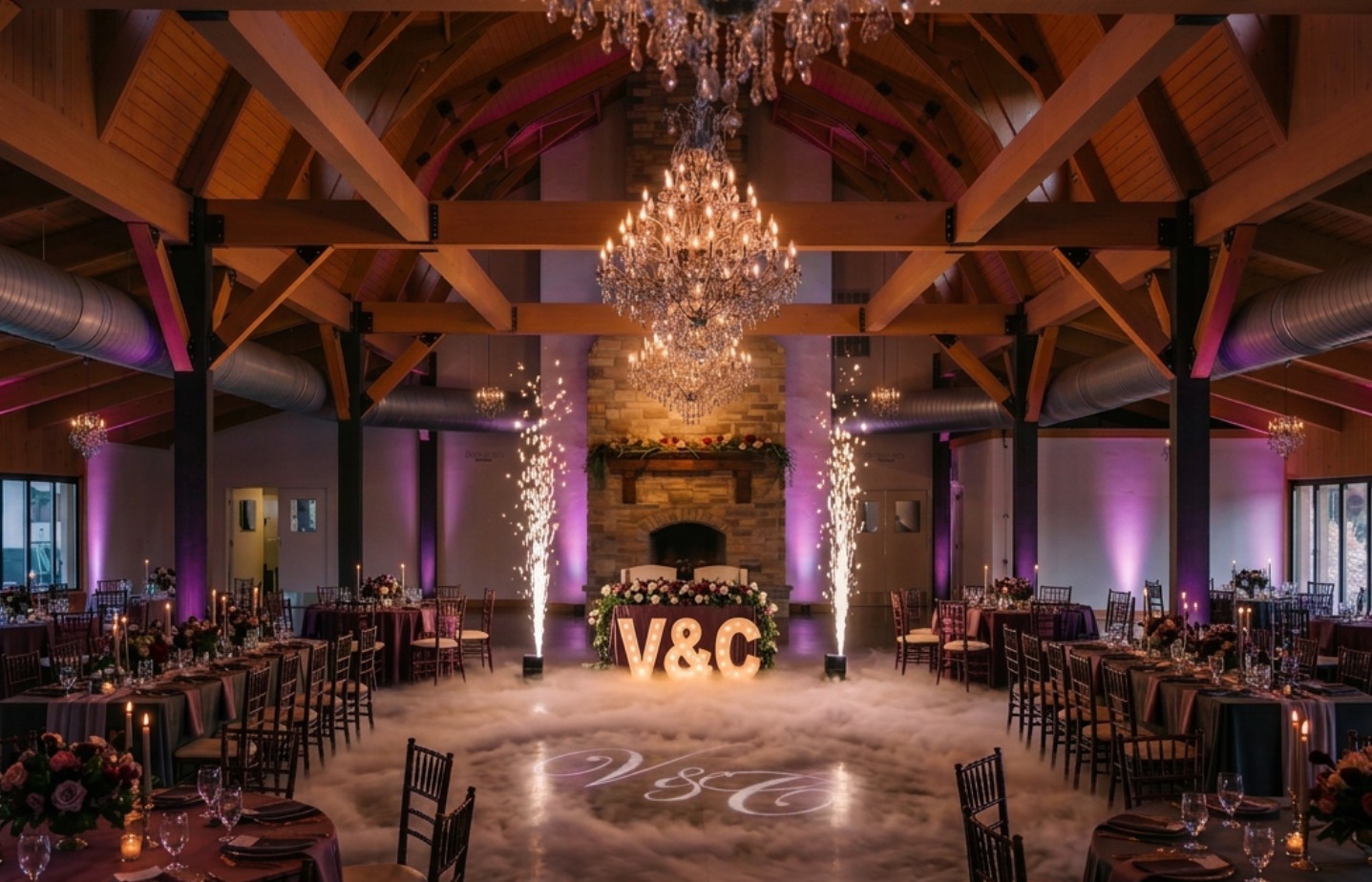
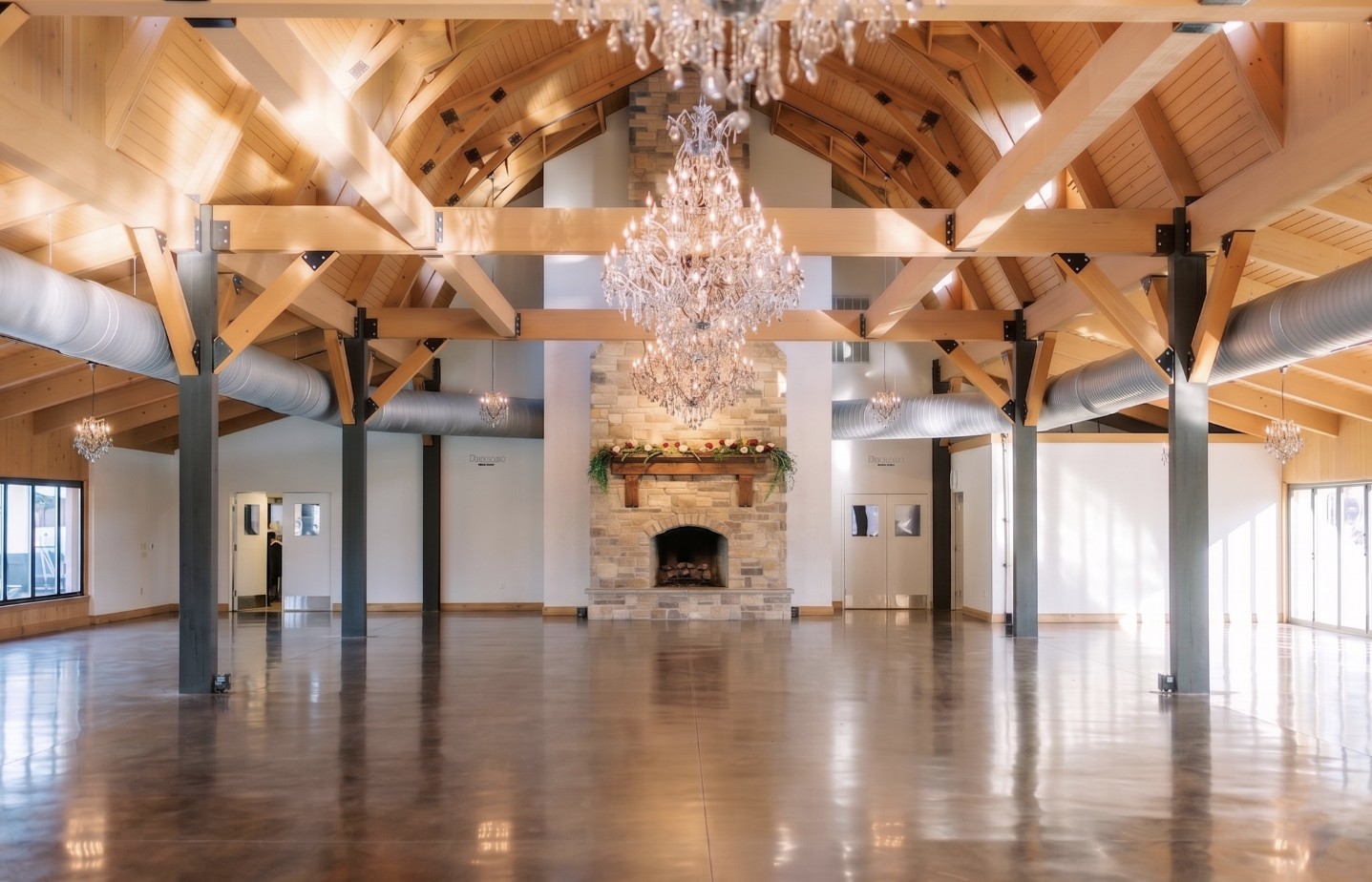
Drag to reveal
VibeCraft Marketplace is being built to help couples picture entertainment and enhancement concepts in real venues when it launches. A visualization is a concept, not an exact prediction of the finished wedding, and it does not confirm venue policies or requirements. Learn more about Wedding Visualization.
A planning exercise
Your venue experience brief.
Use these prompts to think it through, or copy them into your own notes. This is a planning exercise, not a VibeCraft feature. Nothing here is saved or submitted.
Your Venue Experience Brief
The venue already gives us
We want the reception to feel
The main areas we want to emphasize
Lighting should feel
The moments we want to make visually distinct
Enhancements we're considering
Things we don't want to overdo
The overall result should feel
Three example directions. None is the ideal one.
A historic, architectural venue
- The venue already gives us
- exposed beams, stone walls and tall windows.
- We want the reception to feel
- warm and romantic.
- The main areas we want to emphasize
- the architecture itself and the sweetheart table.
- Lighting should feel
- soft and warm, highlighting the stone without changing its character.
- Things we don't want to overdo
- anything that pulls attention away from the room.
- The overall result should feel
- like the venue we fell in love with, at its most beautiful.
A modern ballroom
- The venue already gives us
- a clean, neutral room and a large central dance floor.
- We want the reception to feel
- polished during dinner, then much higher energy.
- The moments we want to make visually distinct
- the first dance and the start of open dancing.
- Lighting should feel
- elegant early, with dance-floor lighting becoming more noticeable later.
- Enhancements we're considering
- uplighting, a monogram and intelligent dance-floor lighting.
- The overall result should feel
- like two chapters: a refined dinner and a real party.
A venue with meaningful family and cultural elements
- The venue already gives us
- a space connected to our family, with traditional decor that matters to us.
- The main areas we want to emphasize
- those family and cultural elements, plus the area where traditions happen.
- Lighting should feel
- supportive, so those elements stay the center of attention.
- Things we don't want to overdo
- effects that compete with the traditions or the decor.
- The overall result should feel
- personal and rooted, with enhancements in a supporting role.
Before you add anything
Questions to ask before adding an enhancement.
What does this actually change about the room or experience?
Is it meant to shape the whole reception or one specific moment?
Where would it go?
What would be behind or around it?
Does the venue permit it?
Does it compete visually with something else we already chose?
Will it still make sense once the room transitions into dancing?
Do we like the enhancement itself, or do we like what it did in someone else's venue?
Could we picture the wedding without it and still get the atmosphere we want?
Questions
Wedding venue transformation FAQ
Do I need wedding enhancements to transform my venue?
No. Many receptions feel exactly right with the venue as it is, or with only small changes. Enhancements are optional tools. They make the most sense when they support a specific feeling, focal point or moment you care about.
What makes the biggest visual difference in a wedding reception?
It depends on the room. In many venues, lighting has a strong effect on how the space feels, but the biggest difference for your wedding comes from whatever best supports the atmosphere you want in the room you chose.
Can lighting change how a wedding venue feels?
Yes. Lighting can add warmth or color, define architecture, draw attention to certain areas and shift the energy of the room as the reception moves from dinner into dancing, all without physically changing the venue.
Is uplighting worth it for every venue?
Not necessarily. How uplighting reads depends on the walls, materials, ceiling height and existing light. In some rooms it changes the atmosphere significantly. In others, the venue's own lighting may already create the feeling you want.
Can you use too many wedding enhancements?
It is possible for choices to compete for attention, space or budget. Using several enhancements is not automatically excessive, though. What matters is whether each one has a purpose and whether they feel intentional together in your room.
Should all wedding enhancements match?
They do not need to match exactly, but it helps when they feel like part of the same atmosphere. Colors, placement and timing that relate to each other usually read as more intentional than choices made one at a time.
How do I know where a monogram should go?
A monogram needs an appropriate surface and a place where people will naturally see it, such as a wall near the dance floor or another focal area. Visibility and the room's layout matter, so confirm options with your venue and the vendor providing it.
Do wedding venues allow cold sparks?
It varies. Some venues permit them and some do not, and local requirements can also apply. Confirm with your venue and the vendor providing the effect before planning around it.
What is the difference between room lighting and dance-floor lighting?
Room lighting, like uplighting and the venue's own fixtures, shapes the overall atmosphere throughout the reception. Dance-floor lighting focuses on the dancing area and can change the visual energy once open dancing begins.
When should I decide on wedding enhancements?
Usually after you have a sense of your venue and the atmosphere you want. Timelines vary by vendor and venue, so ask the companies you are considering how far ahead they need decisions.
Should I choose enhancements before or after choosing my venue?
Generally after. The same enhancement can look and work very differently depending on the room, and venue policies can affect what is possible, so the venue is the most useful starting point.
How can I picture enhancements in my actual venue?
Inspiration photos usually show someone else's venue. Seeing a concept inside your own space can make placement and balance easier to understand. VibeCraft Marketplace is being built to help with that through Wedding Visualization, which shows a concept rather than an exact prediction.
Keep Planning
Where to go next.
Your venue sets the stage.Your choices shape how it feels.
VibeCraft Marketplace is being built to help couples use their venue, atmosphere and entertainment preferences as context for finding DJ companies that may fit the celebration they want.