
The Sound of the Night
Wedding cocktail hour vs. dinner vs. dance floor music
Your reception does not need one musical setting from beginning to end.
Cocktail hour can welcome people in. Dinner can give the room space. The dance floor can build into something completely different. The music can evolve while still sounding like the same wedding.
Think of your reception as a musical journey, not one giant playlist.
One wedding, different moments
The music can change because the job of the room changes.
Not every wedding has all of these, or in this order. Think of them as chapters that help you picture how the music might evolve if those moments are part of your reception. Think in chapters, not separate playlists.
01
Arrival / Cocktail hour
Welcome people in.
02
Dinner
Give the room space.
03
Formalities + transitions
Connect the moments.
04
Opening the dance floor
Change the signal.
05
Peak dancing
Let the world get bigger.
06
Late night
Decide what it becomes.
The soundtrack can move because the celebration is moving.
Welcome people in
Cocktail hour sets the first musical impression.
Acoustic, jazz, instrumental or quiet music can all be great choices. None of them is a rule. Depending on the wedding, cocktail hour can feel like any of these:
Cocktail hour does not have to sound like "cocktail hour music."
It should sound like the beginning of your wedding.
What cocktail hour music can do
- Establish personality
- Introduce your taste
- Create atmosphere
- Support conversation
- Build anticipation
- Connect with the venue and visual environment
- Begin introducing genres that appear later
Guests may be
- Eating
- Talking
- Reconnecting
- Listening to speeches
- Moving between tables
- Getting ready for what comes next
Worth thinking about
- Energy
- Volume
- Familiarity
- Lyrical content where relevant
- Genre
- Pacing
- Transitions around speeches or formalities
Give the room space
Dinner music can carry the vibe without demanding the room's attention.
Dinner often has a different social purpose. Music can still have plenty of personality without competing with conversation or speeches. There is no required genre, and it does not have to be slow or purely background.
Lower attention does not have to mean lower personality.
The moments between
Some of the most important music decisions happen between the big sections.
Your reception may include some of these, or none. When they are part of the night, music around them can help it feel connected rather than stop-and-start.
The moment itself
A specific song or musical choice may matter, like a first dance or a family tradition.
The transition around it
What happens just before and after can affect how naturally the reception moves forward.
A timeline tells you what happens next.
Music can help it feel like it belongs next.
Change the signal
At some point, the room may need to understand that the night has changed.
Moving into open dancing can involve a noticeable shift in several things at once. Some weddings make the change dramatically, others build into it gradually. There is no perfect first dance-floor song.
More on shaping it in How to Build a Wedding Dance Floor That Actually Feels Like You.
The dance floor does not have to explode open.
It just needs a clear invitation.
When the party takes over
This is where the musical world can get bigger.
Once open dancing is established, the purpose of the room has changed, so this part can be more dynamic. Depending on your preferences, the DJ may have more room to work with:
The goal is not to keep every person dancing every minute. It is a dance floor that feels alive and still sounds like your wedding.
After the night finds its groove
Later can be a chance to lean further into what feels like you.
Some couples want late night to become one of these. Others want the same broad direction to continue. Neither is required.
Late night is not automatically younger, louder or wilder.
It is another chance to decide what you want the reception to become.
Genre is not a time slot
A genre does not belong to only one part of the wedding.
The same broad genre can show up in different chapters in different ways. These are examples, not rules. For the bigger picture, see Wedding Reception Music Genres Explained.
R&B
Might shape cocktail hour, carry through dinner and return on the dance floor.
Country
Could appear throughout the night rather than being isolated to one section.
Electronic
Might add atmosphere early and become more prominent later.
Cultural music
May belong to a formal tradition, dinner, open dancing or several parts of the night.
The question is not only "What genres do we like?"
It is also "Where do we want them to show up?"
Make it feel like one night
Different does not have to mean disconnected.
A few threads can carry your musical identity across the reception. You do not need to plan every transition; your DJ can handle the craft.
Cocktail hour, dinner and dancing can have different energy while still belonging to the same musical world.
Build, reset, build again
A reception does not need to get louder and faster every minute.
Energy can rise, settle, reset, build again, change direction, peak and breathe. Here are three example shapes. No shape is preferred.
Gradual build
Relaxed beginning, steady dinner, increasingly energetic dancing.
Early personality, late party
Distinctive cocktail and dinner music, a clear transition, then bigger late-night energy.
Waves
Several rises and resets throughout the reception.
Energy feels bigger when it has contrast.
Direction vs. detail
You can plan the chapters without choosing every song.
You can give your DJ:
- The role each part of the reception should play
- Preferred genres or artists for different sections
- Must-plays
- Boundaries
- Formal-moment selections
- Cultural or family music
- Where the DJ has flexibility
Couples who want tighter control can say so too. See How Much Input Should You Give Your Wedding DJ?
You can design the direction of the night without scripting every minute.
The room changes too
The same guests can want different things at different moments.
Across the night, guests may be:
Talking
Eating
Listening
Joining traditions
Watching
Dancing
Moving between spaces
Reconnecting
Music can support those changes without abandoning your identity. More in How to Balance Your Music Taste With Your Wedding Guests.
What you hear + what you see
The reception changes visually too.
Moving between chapters can also change:
Optional enhancements can add to some weddings. None of them are necessary.
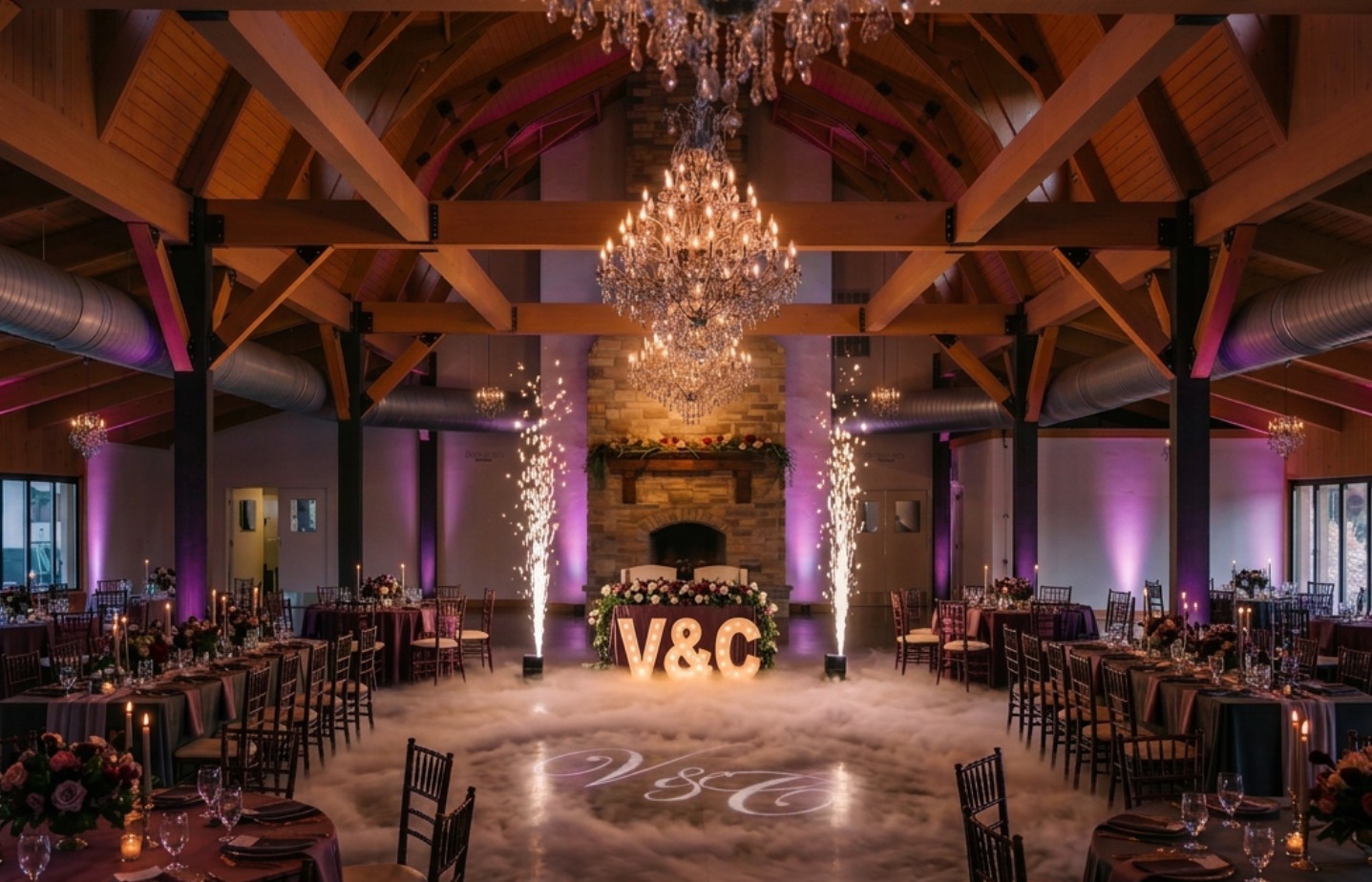
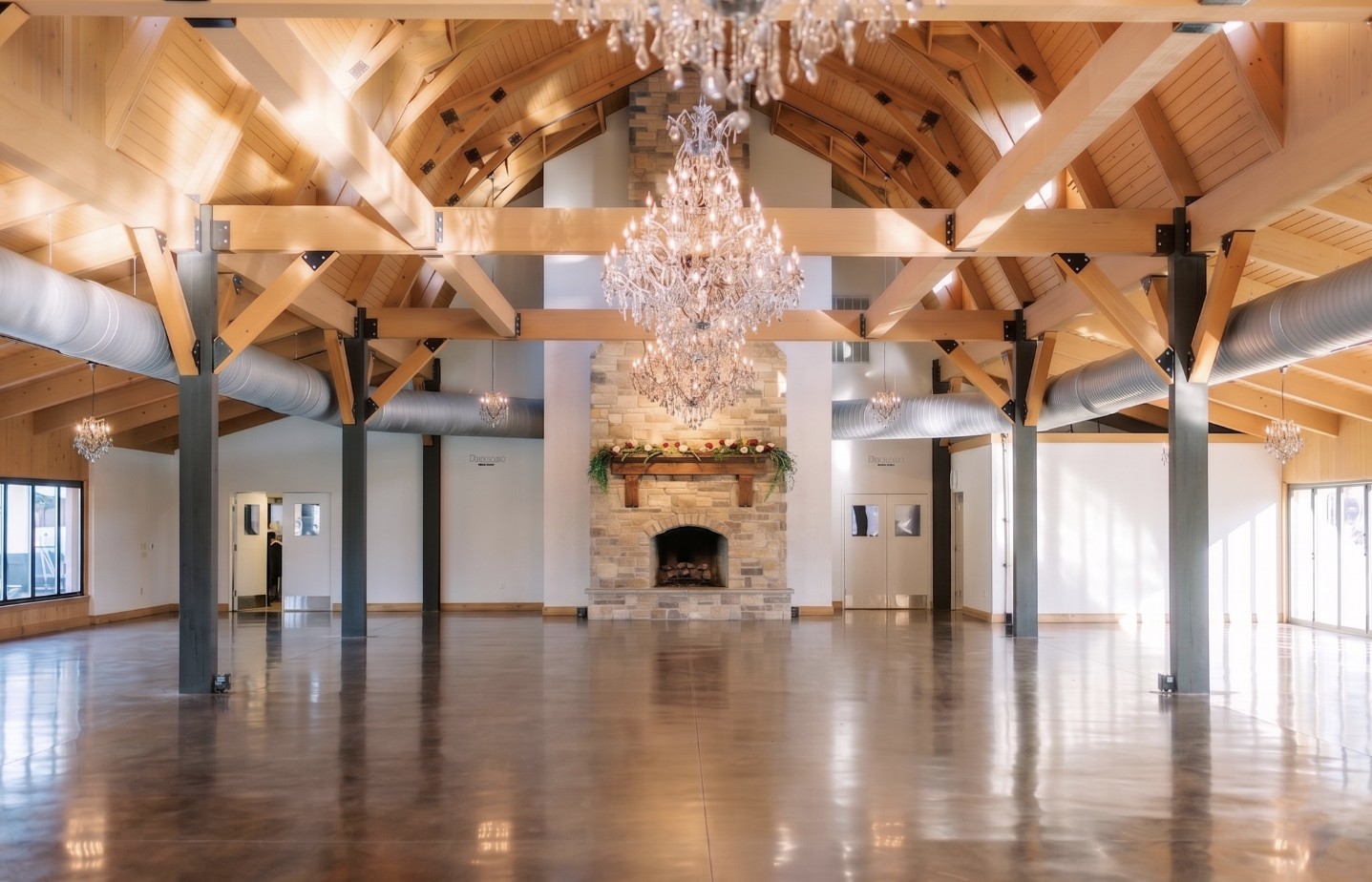
Drag to reveal
A visualization is a concept, not an exact prediction of the finished wedding. Learn more about Wedding Visualization.
Put it together
Give each part of the receptiona job.
Your Reception Music Map. Fill in what applies, skip what does not, and bring it to conversations with DJs.
Your Reception Music Map
01
Cocktail hour
- We want it to feel:
- [words]
- Music direction:
- [genres / artists / eras / influences]
- DJ flexibility:
- [level of direction]
02
Dinner
- We want it to feel:
- [words]
- Music direction:
- [genres / artists / eras / influences]
- Important moments:
- [if applicable]
03
Transition into dancing
- We want the shift to feel:
- [gradual / obvious / high-energy / natural / other]
04
Open dancing
- We want it to feel:
- [words]
- Our strongest music preferences:
- [genres / artists / eras / influences]
05
Late night
- We want it to become:
- [if anything changes]
Throughout the whole night
- Must-plays:
- [priorities]
- Hard boundaries:
- [do-not-plays]
- Cultural / family music:
- [important context]
- Guest requests:
- [policy]
- DJ flexibility:
- [where the DJ can adapt]
EXAMPLE 01
Polished and relaxed, building into broad dancing
- Cocktail hour
- Warm and polished. Soul, classic covers, light vocals.
- Dinner
- Relaxed, a little more familiar, room for conversation.
- Transition
- Gradual. Energy lifts after the last toast.
- Open dancing
- Broad and upbeat across several eras.
- Late night
- Same direction, just a bit louder.
- DJ flexibility
- Plenty, once dancing starts.
EXAMPLE 02
One strong musical identity, used differently all night
- Cocktail hour
- Our favorite indie and alternative artists, mellow side.
- Dinner
- Same artists and related bands, mid-energy.
- Transition
- Obvious. A song we chose signals the switch.
- Open dancing
- The danceable end of our taste, plus 2000s alternative.
- Late night
- Gets more electronic and specific to our friends.
- Hard boundaries
- Generic party staples.
EXAMPLE 03
Traditions, couple taste and a high-energy floor, each with its moment
- Cocktail hour
- Music our families chose, mixed with our own favorites.
- Dinner
- Family music continues at a conversational energy.
- Important moments
- Traditions from both families at planned points.
- Transition
- High-energy, straight out of the last tradition.
- Open dancing
- Our dance music, with family favorites returning.
- Guest requests
- Family requests go through our planner.
Three different nights, and none is the ideal one. This map is a planning exercise, not a VibeCraft feature.
Keep the night connected
A few things can make the soundtrack feel less intentional.
Using one energy level all night
Different moments may benefit from different energy.
Treating each section like a separate event
Variety is useful, but some musical identity can connect the night.
Saving all your personality for the dance floor
Cocktail hour and dinner can sound like you too.
Assuming dinner music has to be boring
Lower energy does not mean generic.
Trying to script every transition
You can communicate direction without choosing every song.
Forgetting the moments between the moments
Transitions can influence how naturally the reception moves.
Every planning style can work. These are just things worth noticing.
See the whole celebration
Your reception ismore than one moment.
VibeCraft is built around understanding the celebration you are actually creating. That can involve context like:
The visualization side can help couples picture parts of the reception environment. VibeCraft Marketplace is being built so that, when it launches, couples can discover DJ companies that may align with the wedding they are creating.
Organic VibeCraft recommendations are not sold to the highest bidder.
Not more options. Better options.
Questions
Reception music timeline FAQ
What music should play during wedding cocktail hour?
Music that sounds like the beginning of your wedding. Depending on the couple, that could be relaxed, soulful, upbeat, nostalgic, modern, playful or culturally specific. There is no single cocktail hour sound you have to follow.
What music should play during wedding dinner?
Music that can carry the vibe while guests eat, talk, reconnect and listen to any speeches. Think about energy, volume, pacing and familiarity rather than one required genre.
Should cocktail hour and dinner music be different?
They can be, because the room is often doing different things. Some couples want a clear change, others want the same direction to continue. Both can work.
When should dance music start at a wedding reception?
There is no required time. It depends on your timeline, formalities, venue and the kind of night you want. What matters more is that the shift into dancing feels like a clear invitation when it happens.
Does wedding dinner music need to be slow?
No. Dinner music often gives the room space for conversation, but lower attention does not have to mean slow or generic. It can still have plenty of personality.
Should cocktail hour music be instrumental?
Only if you want it to be. Instrumental music can be a great choice, but it is not a rule. Cocktail hour can also introduce your taste through vocals, favorite artists or the genres that show up later.
Can we play our favorite genres during dinner?
Yes. A genre does not belong to only one part of the wedding. Your DJ can often find a way for a favorite genre to show up during dinner at an energy that suits the room.
Should the same genres play throughout the wedding?
They can. Recurring genres, artists or eras are one way to make the night feel connected. Other couples prefer more contrast between sections. Neither is required.
How do you transition from dinner to dancing?
Some weddings make a dramatic shift, others build gradually. Changes in energy, volume, lighting, familiarity and DJ presence can all help signal that the night has changed. Talk with your DJ about which feels right.
Should late-night wedding music be different?
Only if you want it to be. Some couples let late night get more specific, nostalgic or high-energy. Others keep the same broad direction. Late night is simply another chance to decide what you want the reception to become.
How much of the reception music should we choose ourselves?
As much as feels right. You can share the role each part of the night should play, plus must-plays, boundaries and formal-moment songs, while leaving flexibility elsewhere. Couples who want tighter control can communicate that too.
How do you make the whole wedding soundtrack feel connected?
Let something carry across the night, such as favorite artists, shared eras, cultural influences or a consistent emotional tone, and let energy change gradually or with intention. You do not need to plan every transition.
Keep Planning
Where to go next.
One wedding.A whole night of moments.
The music can change. The energy can build. The room can transform. What connects it all is the celebration you are creating, and a DJ who understands that bigger picture.